-
The first day of what is likely to be my last year of school today. Such a strange little microcosm academia creates. Took a walk through the campus with Rosie yesterday afternoon. Every possible version of Arcadia here, from the open rolling lawns overlooked by buildings like classical temples to the dark redwood groves with meandering paths and secret gardens (one thinks of The Blythedale Romance, if one has read it, and expects to see love letters scattered about as if the trees brought forth Byronic prosody for fruit)
-
But with the exception of a few lovers looking longingly into each other’s eyes in attempts to negate a summer’s absence, the mood is one of nervous anticipation, not consuming passion. What a difference two hundred years makes. The early nineteenth century: the first world at last frees itself from the land’s caprices, from ignorance and poverty, and all anyone can think of–that is, the vast majority of humanity, not the Lords, who go on plotting in all ages–is love, love, love. The Broadwood piano infiltrates homes like a first version of the robots in I, Robot, but where Asimov’s creatures can only perform manual labor, the piano is a mechanism in the service of love, and Beethoven, Chopin, and Liszt pour out of windows everywhere. Turner’s brilliantly glowing paintings, Jane Austen’s novels on every bookshelf: the world was utterly mad for romance, and young men of seventeen really did wander through New England campuses composing love letters to drop on paths.
-
Living in an age sobered by war and the constant fear of nuclear destruction, we are inclined to find Romanticism a bit naive or even arch. Students today are here to learn, or rather be trained in skills that will make them money, and since we have more or less discarded all the mystery in sex, the whole business of lingering in the gazebo to sigh and daydream about the color of one’s true love’s hair has fallen out of practice. Desires are satisfied more pragmatically, leaving the quiet paths through the woods to the dog and me.
-
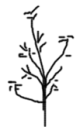
Appropriately enough, we come across the last dryad. She lives in the bushes near Strawberry Creek up by the music building. I wonder how many people have even noticed her. She has the long limbs of an art deco goddess, the curling hair of a Roman empress, and the sorrowful eyes of Maria. She sits on a tree limb, waiting for the day when the bushes will have surrounded her and she too has been forgotten. There is no afterlife for the old gods, only sweet oblivion. Some day it will be impossible to imagine that they ever could have existed.
-
Walking with a dog, you begin to notice things that could only have come to you through the animal’s senses. You find a strange joy in the curve of hills, the smell of old leaves, and the sound of water pooling in a creek bed. The animal emotions of other people rise to the surface: fear, happiness, anger. You see past the clothes, makeup, and practiced nonchalance of the pretty girls as they walk down the street. You see how preoccupied everyone is, how the world weighs on them. All the burdens of being an adult are dropped in our laps so suddenly. We learn how to deal with them, of course: we learn how to be liked, how to jump through hoops, how to hide our fear when it’s necessary.
-
There was a time when you let me know / What was really going on below. I am still struck with awe when I remember what you let me see of you.
-
How quickly I grew up! I was made in the image of this age. Mind like a steel trap, steady hands, Nordic stillness. I took control of the gates and drawbridges of my heart. I decided what to feel about things, and I did not permit anyone to inferfere with my quest for knowledge. I cut myself off from the fears and desires of other people. I could have become something truly awful, if I had not mistrusted power. Instead, I lived alone.
-
Beauty exposes a man. It makes things precious and irreplaceable. He becomes vulnerable to death. These hips, these eyes, this soft hair on her arms, will never come again. This moment will not repeat. He becomes something else: Nina Simone is always singing Ne me quitte pas to him, for him, and from that instant he is no longer satisfied by anything except to be emptied of everything. How strange: from this death, children are born, and with each child he becomes even emptier, even more transparent. If he does not turn away to protect himself he will–by grace–enter heaven made of nothing but love.
last modified: 2004-09-02 14:18:06 -0400